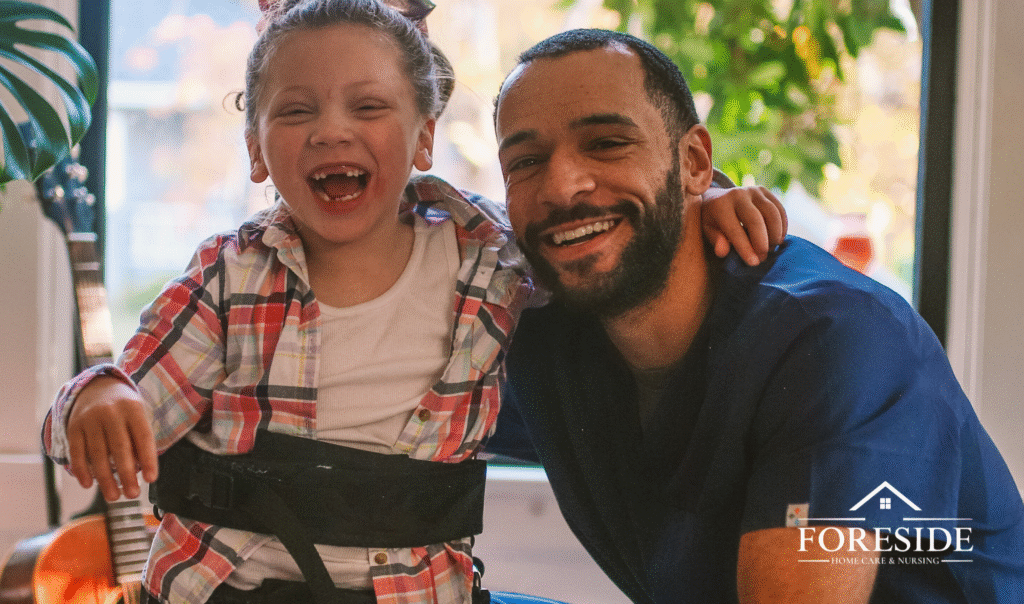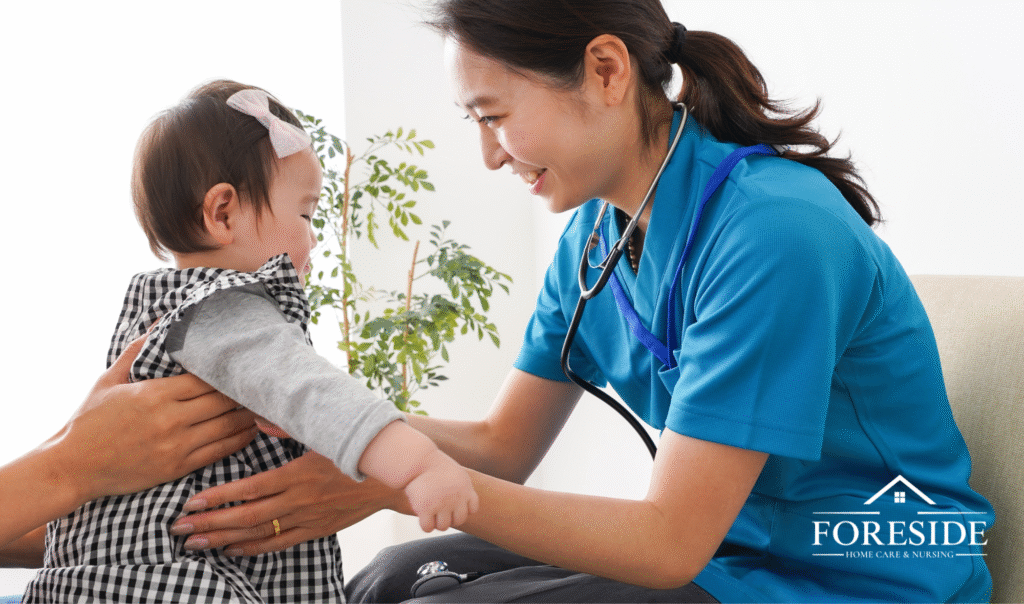

Many parents are surprised to learn that serious medical care does not always have to happen inside a hospital. Today, more children with complex needs are getting safe, skilled care right in their own living room or bedroom.
Families choose pediatric home care because it:
- Keeps their child in a familiar, comfortable place.
- Lowers the risk of hospital infections.
- Makes life easier for parents, siblings, and caregivers.
- Often costs less than long hospital stays when covered by insurance.
Foreside Home Care & Nursing in Mission Viejo brings hospital-level care to Orange County homes, so kids can heal where they feel safest!
#1: Is Pediatric Home Care as Safe as Hospital Care?
Multiple studies have looked at “hospital-at-home” programs for children. The big question: do kids at home have more complications or end up back in the hospital more often?
Here is a simple comparison:
| Factor | Hospital Care | Pediatric Home Care |
| Infection risk | Higher (more sick people around) | Lower (home environment) |
| Adverse events/readmission | Similar to home care | Similar to hospital care |
| Comfort & stress | Noisy, unfamiliar | Calm, familiar, with family |
When a child is medically stable enough to be outside the hospital, pediatric home care can be just as safe, and often more comfortable, than staying in a hospital bed.
#2: What Medical Conditions Can Be Managed at Home?
Home care today is not just for “simple” cases. Many children with complex needs can be cared for at home when a skilled team is in place.
Common pediatric conditions supported at home include:
- Premature birth complications.
- Congenital (from birth) conditions.
- Neurological conditions (cerebral palsy, seizure disorders).
- Respiratory illnesses and chronic lung disease.
- Ventilator or tracheostomy care.
- G-tube feeding and special nutrition.
- IV antibiotics and other infusions.
- Post-surgery recovery and wound care.
- Complex medication schedules and monitoring.
Foreside Home Care’s pediatric services in Southern California are designed specifically for these conditions, with RN-led care and close coordination with the child’s doctors.

#3: How Much Does Pediatric Home Care Cost?
The cost depends on:
- Your child’s medical needs.
- How many nursing hours are needed.
- Which insurance or programs you have.
Research comparing inpatient versus home treatment found that hospital costs per child were nearly double those of home care. Home care is often more cost-effective for long-term or ongoing needs.
Who can help pay?
- Private insurance: Many plans cover medically necessary pediatric home health when ordered by a doctor.
- Medicaid & Medicaid waivers: Major funders of pediatric home health, often with broad coverage for complex needs.
- CHIP (Children’s Health Insurance Program): Helps families who earn too much for Medicaid but struggle with private insurance costs.
- Supplemental Security Income (SSI): May help children with significant disabilities.
Because every plan is different, most families work with the home care agency’s office and their insurance company to confirm coverage and out-of-pocket costs.
#4: Will My Child Receive Better Care at Home Than in a Hospital?
“Better” care means more than just machines and monitors. It includes emotional support, family time, sleep, and the ability to live a somewhat normal life. Studies of pediatric home care show:
- Families often prefer home once they’ve tried it.
- Children report a higher quality of life at home than in the hospital.
- Parents feel more involved and more confident in their child’s care.
Hospitals are essential for emergencies and unstable conditions. But for many long-term or stable medical needs, home care can provide:
- One-on-one focus from the nurse.
- Less noise, less stress, better sleep.
- More time with siblings, friends, and pets.
For many children, that adds up to care that feels better and supports recovery and development more fully.
#5: What Qualifications Do Pediatric Home Care Nurses Have?
Pediatric home care is not “babysitting with a stethoscope.” Nurses are licensed medical professionals.
Typical qualifications include:
- Licensed as a Registered Nurse (RN) or Licensed Vocational/Practical Nurse (LVN/LPN).
- Special training in pediatrics, ventilator care, G-tubes, tracheostomies, and emergencies.
- Experience in hospital units like NICU, PICU, or pediatric floors (for many RNs).
- Ongoing education in child development, infection control, and family-centered care.
Foreside Home Care is RN-led, meaning a registered nurse supervises the care plan, trains the team, and works directly with your child’s doctors to keep care safe and up to date.
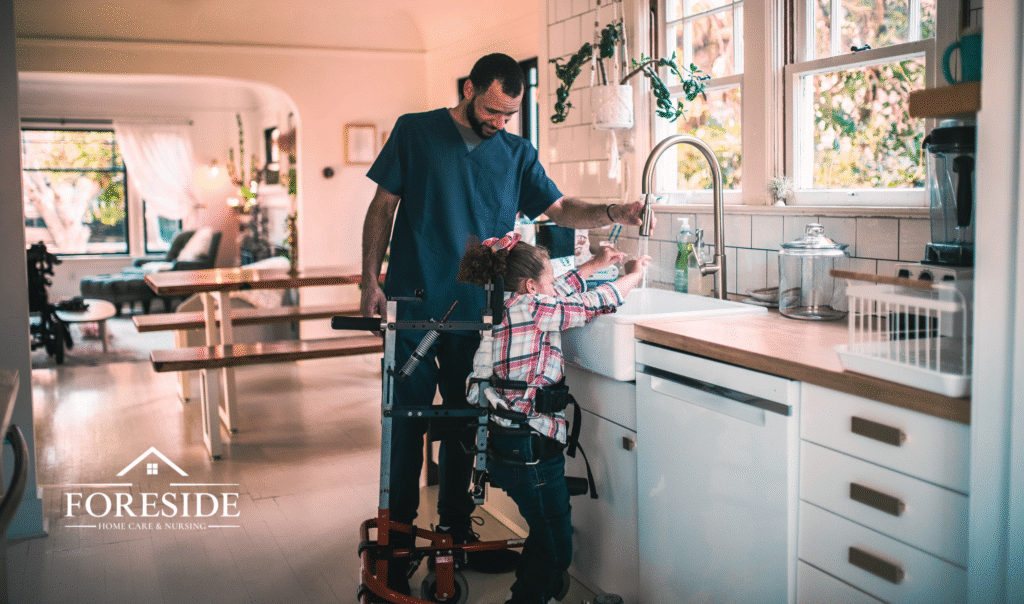
#6: How Will Home Care Affect Our Family’s Daily Life?
Adding nurses to your home is a big change, but for many families, it makes life more manageable.
What may improve:
- Less rushing to the ER or hospital for every issue,
- More predictable routines around school, work, and sleep.
- Extra help with complex tasks like suctioning, feeds, or medications.
What will feel different:
- A nurse will be part of your daily rhythm, sometimes for many hours.
- There will be medical equipment in your home.
- Some privacy routines may need to be adjusted.
Families in home care programs often report greater comfort, better organization, and a feeling that life is finally “doable” again, even with a medically complex child.
#7: Can Parents Learn to Help with Their Child’s Care?
Parent training is a core part of high-quality pediatric home care. In many programs, nurses:
- Teach parents how to use equipment (pumps, feeding tubes, oxygen).
- Show how to check for warning signs and when to call for help.
- Practice emergency steps, like what to do during a seizure or breathing problem.
- Explain medications in plain language.
Foreside Home Care continues this education over time, checking in, answering questions, and helping parents feel steadily more confident.
#8: What Happens If There’s an Emergency?
Every pediatric home care plan includes clear emergency steps.
These may include:
- Written instructions on when to call the nurse, the pediatrician, or 911.
- Emergency supplies (suction, oxygen, backup equipment) kept in the home.
- Specific action plans for seizures, breathing trouble, or equipment failure.
- Fast communication between the home care nurse and the child’s doctors.
In one home-hospital program, parents were trained to recognize warning signs and return the child to the hospital promptly if needed. With a strong plan, families know exactly what to do and who to call, which often reduces panic and delays in a crisis.
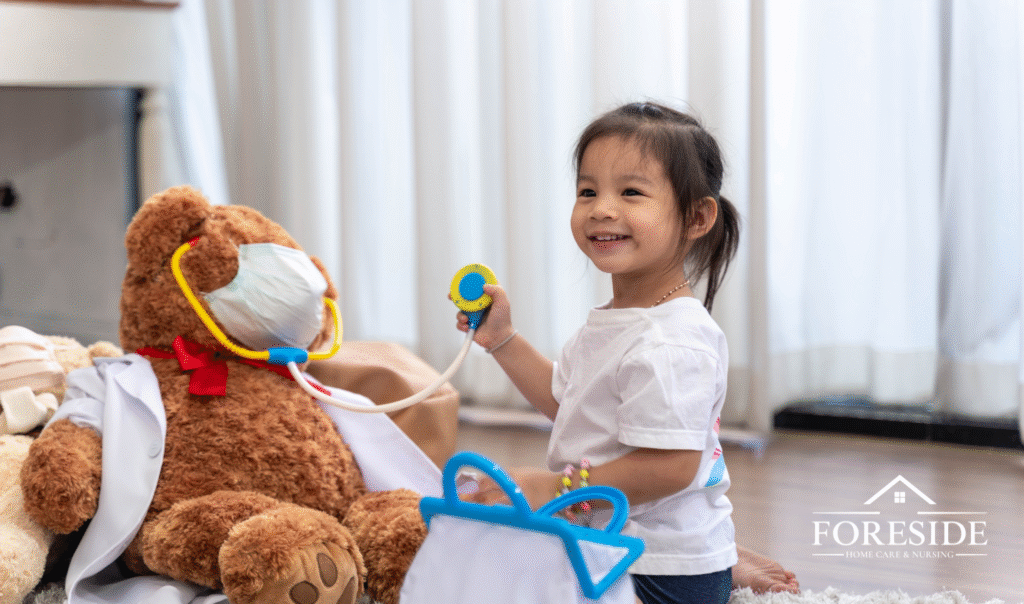
#9: How Does Home Care Support My Child’s Development?
Children do not pause their growth just because they are sick. Good pediatric home care looks at the whole child: body, brain, and emotions.
Benefits for development:
- Staying in school or receiving learning support.
- Keeping social ties with friends and siblings.
- Developing, practicing, and playing skills at home.
- Receiving therapies (such as physical, occupational, or speech therapy) at home as needed.
Home care teams often coordinate with therapists and teachers to help your child hit milestones, not just medical goals. Being surrounded by familiar people and routines can boost emotional health and make therapy feel less scary.
#10: How Do We Get Started with Pediatric Home Care?
The process usually looks like this:
- Talk to your child’s doctor:
- Ask if your child is medically stable enough for home care.
- Request a home health or pediatric home care referral.
- Choose a home care agency:
- Look for RN-led, pediatric-experienced teams (like Foreside Home Care & Nursing).
- Ask which hospitals and pediatricians they already work with.
- Insurance and funding review:
- The agency helps verify your benefits and any needed prior authorizations.
- Home safety and equipment check:
- Nurses review your home layout, power outlets, and space for equipment.
- Care plan and schedule:
- Together, you set goals, nursing hours, and routines that fit your family.
Foreside Home Care offers free consultations to help families understand their options and decide if pediatric home care is the right next step.
Choosing the Right Care for Your Child
For many families, pediatric home care is the “middle path” between doing everything alone and living in the hospital. When a child is stable enough to leave the hospital, home care can offer:
- Safety that matches hospital care for the right patients.
- Lower infection risk and fewer stressful trips to the ER.
- Stronger family life and better quality of life for the child.
The best choice is the one that fits your child’s medical needs and your family’s everyday reality. A trusted, nurse-led home care agency can help you weigh those options clearly.