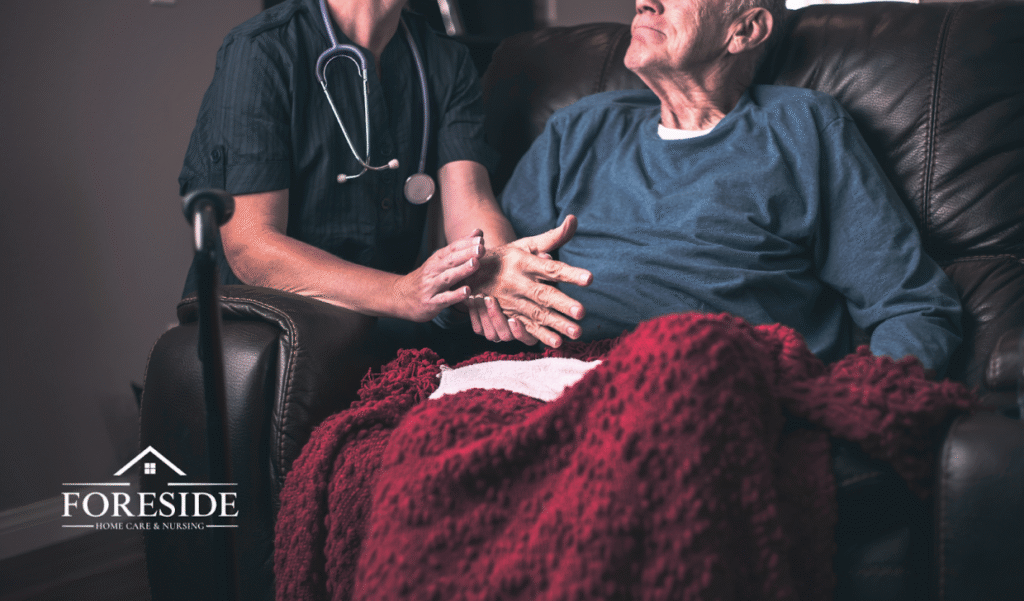

Coming home from the hospital should feel like relief, not risk. And in Southern California, where healthcare costs are soaring and hospital readmissions carry serious penalties, getting this right isn’t just about better outcomes; it’s about better care, period.
That’s exactly where RN-led transitional care steps in. Unlike standard home health that sends an aide to check vitals and refill pill boxes, registered nurse-led programs provide medical-grade assessments, medication reconciliation, and direct physician communication during those fragile first seven days.
It’s the difference between crossing your fingers and having a clinical professional who knows what they’re looking at and what to do about it.
What you will learn:
- Why the first seven days after hospital discharge are a critical window for preventing avoidable readmissions, and how RN-led care can make the difference during this period.
- The unique structure of Foreside Home Care’s RN-led transitional care protocol designed to stabilize patients at home and reduce costs.
- The clinical and financial impact of skilled nurse oversight on families in Orange County.
The Critical 7-Day Post-Discharge Window: Why Most Readmissions Happen
Think of the first week after hospital discharge as a tightrope walk. The percentage of preventable readmissions within the first seven days post-discharge reaches 36.2%, compared to just 23.0% for readmissions occurring between days 8 and 30.
Why? Because quality signals peak on day one after discharge and decline rapidly, reaching their lowest point at seven days. After that seventh day, readmissions become less about hospital care quality and more about community and household factors beyond clinical control.
If you’re going to prevent a readmission, you’ve got to act fast, and you’ve got to act with nursing expertise.

The Hidden Costs of Failed Transitions for Orange County Families
Let’s talk about what “readmission” really means for a family in Southern California. It’s not just another hospital bill. It’s watching Mom deteriorate because nobody caught her medication error on day three. It’s Dad back in the ICU because a wound infection went unnoticed. It’s the emotional toll of thinking you’ve turned a corner, only to be slammed back to square one.
And financially? Orange County families already navigate some of California’s highest living costs, with median household incomes around $113,702, but that doesn’t shield them from the cascade of expenses a readmission triggers. Lost work hours for caregivers. Additional co-pays and deductibles. Extended recovery periods. The costs ripple outward, hitting families when they’re most vulnerable.
Foreside’s Proven 7-Day RN-Led Transitional Care Protocol
Here’s how we do things differently at Foreside Home Care & Nursing.
We don’t wait for problems to announce themselves. Our RN-led transitional care protocol is built around the science of that critical first week: structured, systematic, and staffed by registered nurses who know how to catch complications before they spiral.
Day 1-2: Immediate Post-Discharge Assessment and Medication Reconciliation
Within 24 to 48 hours of hospital discharge, a Foreside registered nurse arrives at your loved one’s home. Not an aide, not a technician, but a licensed RN who performs a comprehensive clinical assessment covering:
- Vital signs and baseline health status.
- Wound inspection and infection screening.
- Mobility and fall risk evaluation.
- Cognitive function and mental status.
- Home safety assessment.
Our RNs cross-check every medication against hospital discharge orders, primary care records, and pharmacy records. They confirm what should be taken, when, how much, and what to watch for.
Day 3-4: Care Plan Implementation and Family Training
By midweek, our RN has developed a roadmap tailored to your family member’s specific diagnosis, risk factors, and home environment. This includes:
- Disease-specific education (heart failure symptom recognition, COPD breathing techniques, diabetes management).
- Caregiver training for wound care, catheter management, or medical equipment operation.
- Nutrition counseling aligned with dietary restrictions.
- Warning signs that require immediate medical attention.
Day 5-7: Monitoring, Adjustment, and Long-Term Planning
The final push of our seven-day protocol focuses on stabilization and sustainability. Our RN conducts follow-up assessments, monitors progress against clinical benchmarks, and adjusts the care plan as needed. This phase includes:
- Verification of scheduled follow-up appointments with primary care physicians or specialists.
- Coordination with pharmacies for medication delivery or adjustments.
- Communication with hospital discharge teams and primary care providers.
- Transition planning for ongoing home health services if clinically indicated.
Research demonstrates that physician follow-up visits within 7 to 10 days post-discharge yield optimal readmission reduction, with 67.8 fewer readmissions per 1,000 discharges. Our RN-led care ensures those appointments actually happen and that patients arrive prepared, informed, and stable.
Measurable Outcomes: Our 30-Day Readmission Prevention Rate
While specific outcome data varies by patient population and condition, the structure of our program aligns with best practices proven to achieve:
- 20% to 50% reductions in 30-day readmission rates compared to standard care.
- Significant cost savings through prevented readmissions and reduced emergency department utilization.
- Improved patient satisfaction and confidence in managing their health at home.
These achievements are the result of dedicated RN oversight, structured assessment tools, and relentless focus on those first seven days when everything hangs in the balance.
What Sets Foreside’s Transitional Care Apart in Southern California
RN-Led vs. Aide-Only Care: The Clinical Difference
Aides are valuable, but they’re not nurses. A home health aide can assist with bathing, meal prep, and companionship. They can remind someone to take medications. But they cannot assess clinical deterioration, reconcile complex medication regimens, operate advanced medical equipment, or coordinate with physicians.
Registered nurses undergo rigorous education (associate’s or bachelor’s degrees in nursing) and pass the NCLEX-RN exam. They’re licensed by the state and regulated by nursing boards.
Their scope of practice includes:
- Administering medications and injections.
- Wound care and dressing changes.
- Vital sign interpretation and clinical assessment.
- Care plan development and modification.
- Direct communication with physicians and specialists.
24/7 Physician Communication and Care Coordination
Here’s another thing that sets Foreside apart: we don’t operate in isolation. Our RNs maintain open communication lines with hospital discharge teams, primary care physicians, specialists, and pharmacies. If something looks off at 2 a.m., our care coordination protocols ensure the right people get notified and appropriate action gets taken. Not Monday morning, but immediately.
This cross-continuum communication is identified by research as one of the key ingredients in successful readmission prevention. Hospitals, post-acute providers, home care agencies, patients, and families working together.
That’s the model that works. And it’s the model we’ve built.
Frequently Asked Questions About RN-Led Transitional Care
Q: How is RN-led care different from regular home health aide services?
A: Registered nurses hold state licenses, advanced clinical training, and can perform medical tasks like medication administration, wound care, vital sign interpretation, and care plan adjustments. Home health aides provide valuable personal care assistance but cannot perform clinical assessments or medical procedures.
Q: Will insurance cover RN-led transitional care?
A: Coverage varies by insurance type and medical necessity. Medicare, Medicaid, and many private insurers cover medically necessary skilled nursing services when prescribed by a physician. Foreside Home Care & Nursing can help verify your specific coverage and benefits.
Q: What conditions benefit most from transitional care?
A: Heart failure, COPD, pneumonia, stroke, post-surgical recovery, and conditions requiring complex medication management show the highest readmission risk and benefit most from RN-led transitional care.
Q: How quickly can Foreside Home Care start services after discharge?
A: Foreside can initiate RN-led transitional care within 24-48 hours of hospital discharge, ensuring your loved one receives critical clinical support during the most vulnerable window.
Q: Does Foreside serve all of Orange County?
A: Yes, Foreside Home Care & Nursing serves Mission Viejo and surrounding Orange County communities with comprehensive RN-led transitional care and home health services.