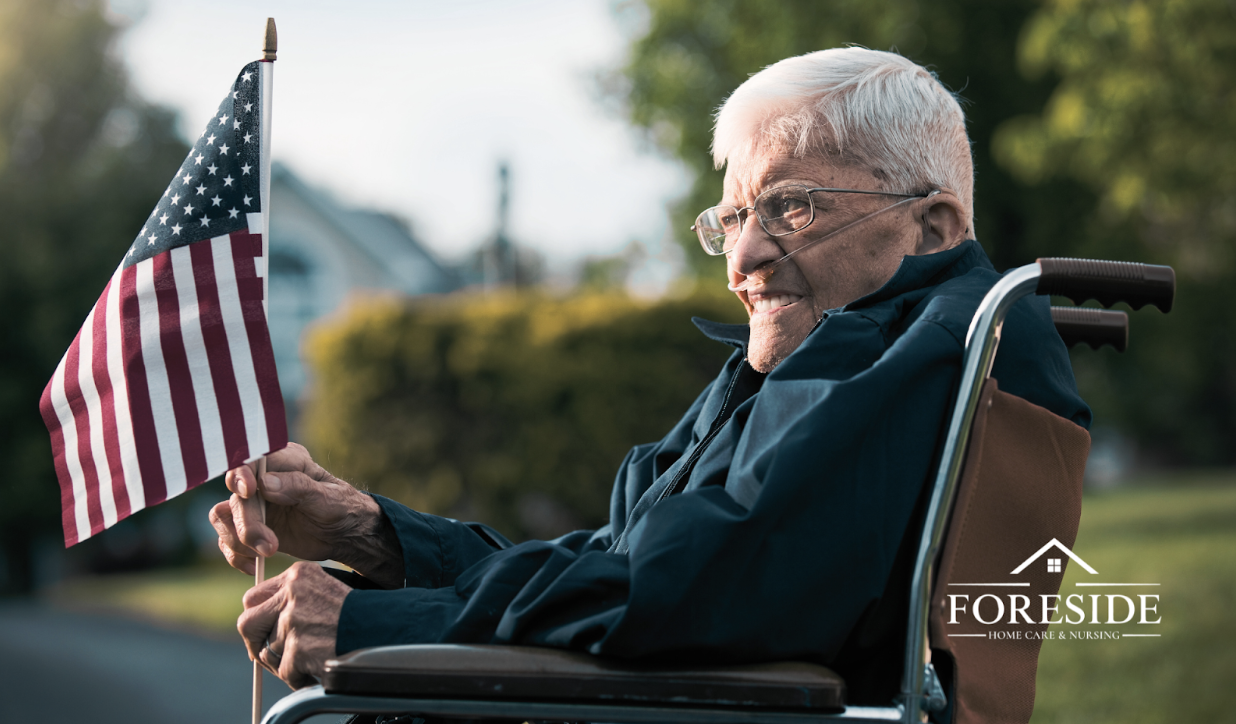
When our heroes come home, they shouldn’t have to face their battles alone. That’s the heart of compassionate home care for veterans at Foreside Home Care: We’re here to honor your service by bringing specialized, trauma-informed support right to your doorstep across Southern California.
The Hidden Battle Our Veterans Face
Over 97,000 California veterans are living with PTSD right now, and that number isn’t getting smaller. In Southern California specifically, we’re home to some of the highest concentrations of military veterans in the entire country. Yet for too many of our heroes, the transition home means facing new challenges: nightmares that won’t quit, anxiety that creeps in without warning, and the feeling that nobody really gets what you’ve been through.
But here’s the thing: You’re not broken, and you’re definitely not alone. PTSD isn’t a sign of weakness; it’s a normal response to abnormal experiences. And with the right support, healing isn’t just possible; it’s happening every day right here in Orange County, LA County, and Riverside County.
Understanding How PTSD Really Affects Daily Life
Let’s be real about what PTSD looks like when you’re trying to live your life. It’s not just what you see in the movies—it’s the way your heart pounds when someone slams a door, or how crowded spaces suddenly feel threatening.
- The Sleep Struggles: Nightmares, insomnia, and that hyper-vigilant feeling that makes it impossible to truly rest. When you can’t sleep, everything else gets harder.
- The Emotional Rollercoaster: One minute you’re fine, the next you’re dealing with anger that seems to come out of nowhere, or feeling disconnected from the people you love most.
- Avoidance Patterns: Maybe you’ve stopped going to certain places or doing things you used to enjoy because they trigger memories you’d rather not face.
- Family Impact: It’s not just affecting you—your loved ones are trying to figure out how to help, but they might not understand why you’ve changed.
The tough truth? Nearly 30% of Vietnam veterans have experienced PTSD in their lifetimes, and up to 20% of recent service members are dealing with it right now. You’re in good company, even when it doesn’t feel that way.
Trauma-Informed Care That Actually Gets It
We don’t just provide care—we provide care that understands where you’ve been and what you need.
- Shifting the Conversation: Instead of asking “What’s wrong with you?” trauma-informed care asks “What happened to you?”. That’s not just a different question—it’s a completely different approach that recognizes your experiences and honors your journey.
- Creating Safety at Home: Your home should be your sanctuary, not another place where you have to be on guard. Our caregivers are trained in de-escalation techniques, understanding triggers, and creating calm environments where you can actually relax.
- Military-Informed Understanding: Many of our team members are veterans themselves, so when we say we get it, we really mean it. There’s something powerful about being cared for by someone who understands military culture and the unique challenges of coming home.
The six principles that guide our trauma-informed approach aren’t just words on paper; they’re how we show up every single day: safety, trustworthiness, choice, collaboration, empowerment, and peer support.
Integrating Mental Health Support That Works
Mental health isn’t separate from physical health—they’re all connected, and that’s how Foreside Home Care approaches your care.
- Coordinated Counseling Services: We work directly with local VA resources, Vet Centers, and private therapists to make sure you’re getting consistent, integrated support. No more falling through the cracks between different providers.
- Telehealth Options That Make Sense: Sometimes, leaving the house for therapy feels impossible; we get that. That’s why we help you connect with remote therapy options that bring professional mental health support right to your living room.
- Peer Support Networks: There’s incredible healing power in connecting with other veterans who understand your experience. We help facilitate those connections because sometimes the best medicine is knowing you’re not alone.
- Medication Management for Mental Health: If you’re dealing with medications for depression, anxiety, or PTSD, our skilled nurses ensure everything’s managed safely and effectively.
Empowering Your Family to Be Part of the Solution
Your family wants to help; they just might not know how. That’s where family education and support become crucial parts of your care plan.
- Recognizing Warning Signs: We teach your loved ones how to spot when you might be struggling and what they can do to help without making things worse.
- Communication Strategies: Family members learn trauma-informed communication techniques that create connection instead of conflict.
- Stress Management for Everyone: PTSD affects the whole family, so we provide tools and resources that help everyone cope better.
- Community Connections: We help connect your family with local support groups and resources specifically designed for military families in Southern California.
Building a Support Network That Lasts
Recovery isn’t a destination; it’s an ongoing journey, and having the right support network makes all the difference.
- Local VA Coordination: We maintain strong relationships with VA Central California, North Orange County Vet Center, and other local VA resources to ensure seamless care coordination.
- Community Partnerships: From Heroes Landing in Orange County to the various veteran support organizations throughout LA and Riverside Counties, we help connect you with the broader community of support.
- Ongoing Care Management: Your needs change over time, and so does your care plan. We’re there for the long haul, adjusting and adapting as you heal and grow.
Frequently Asked Questions
Q: Does insurance cover trauma-informed home care for veterans?
A: Many insurance plans, including VA benefits and Medicare, cover home care services when medically necessary. We’ll help you navigate your specific benefits and work with your coverage.
Q: What if I’m not comfortable with male caregivers due to military sexual trauma?
A: We absolutely understand and respect gender preferences for caregivers. Our team includes both male and female professionals, and we’ll match you with someone who makes you feel safe and comfortable.
Q: Can you help if I’m also dealing with substance use issues?
A: Yes, trauma-informed care recognizes that many veterans use substances as a way to cope with PTSD. We coordinate with specialized programs that address both PTSD and addiction simultaneously.
Q: What if I live far from VA facilities?
A: That’s actually one of the biggest advantages of home care: We bring the support to you. Plus, we can help coordinate telehealth services and connect you with local resources in your specific area.
Q: How do I know if trauma-informed care is right for me?
A: If you’ve experienced trauma during your military service and it’s affecting your daily life, relationships, or overall well-being, trauma-informed care can help. Even if you’re not sure, we encourage you to reach out. We’ll help you figure out what kind of support would be most beneficial.