Families in Orange, LA, and Riverside Counties are doing the heart work, caring daily for someone living with dementia.
Here’s the key takeaway: Implementing small, thoughtful changes at home can significantly enhance safety, alleviate anxiety, and promote dignity. This guide provides practical, compassionate steps for adapting your environment to support dementia care without transforming your home into a hospital.
Why Home Safety Becomes Everything for Dementia Families
California is facing an unprecedented dementia crisis. With hundreds of thousands of people over 65 living with Alzheimer’s disease, and projections showing this number will grow exponentially by 2040, families across Orange County, LA County, and Riverside County are scrambling to figure out how to keep their loved ones safe at home.
Dementia changes how your loved one perceives and navigates their world. What used to be a familiar hallway might now seem confusing, and that favorite armchair could become a stumbling hazard. But here’s the good news: With the right modifications and professional support, home can remain the safest, most comforting place for your family member to be.
Adapting the Environment for Dementia Care in Southern California: Start with Safety
Think “prevent first, support second.” A safer setup prevents falls, wandering, and overwhelm while keeping independence front and center.
- Install automatic nightlights in hallways, bathrooms, and bedrooms.
- Add contrasting colors to define edges (toilet seats, step edges, countertops).
- Remove trip hazards, such as loose rugs, cords, footstools, and clutter.
- Use lever door handles and large, easy-grip cabinet pulls.
- Lock or secure hazardous areas (garage, pool access, cleaning supply cabinets).
Quick Room-by-Room Checklist
- Entryway: Non-slip mat, motion-sensor light, bench for shoe changes.
- Living room: Clear walkways at least 36″ wide; stable furniture; no glass corners.
- Kitchen: Label drawers; store frequently used items at waist height; turn off gas at the valve if needed; use induction cooktops to reduce burn risk.
- Bathroom: Raised toilet seat, grab bars, non-slip mat, handheld shower, scald guard at 120°F.
- Bedroom: Bed at proper height; minimal patterns; memory box or photo frame near wardrobe.
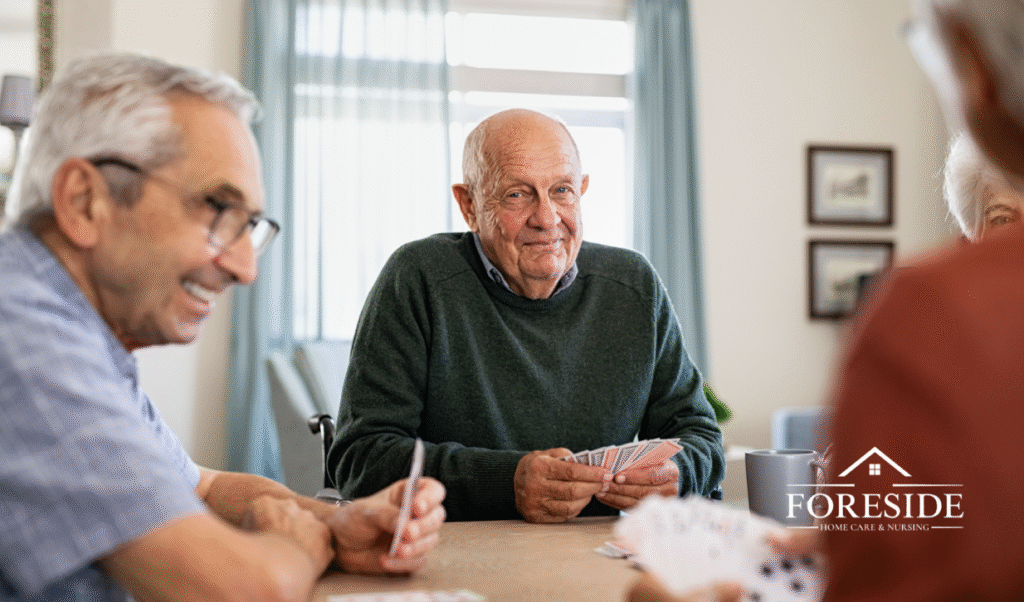
Light, Color, and Calm: The SoCal Advantage
Southern California’s sunshine is a gift. Use it.
- Prioritize morning light to support circadian rhythm and reduce sundowning.
- Sheer curtains soften glare while keeping rooms bright.
- Choose calm, warm neutrals for walls; use color contrast for clarity (light plates on dark walls, dark plates on light walls).
- Avoid busy patterns on carpets or bedding. They can look like obstacles or “holes.”
Make Navigation a Breeze
When memory is shifting, clear cues make all the difference.
- Use large, simple signs with both words and icons (e.g., “Bathroom” + toilet icon).
- Label drawers and doors with photos of contents.
- Keep common-use items visible and accessible; hide what’s not needed to reduce overwhelm.
- Create a consistent “home base” chair and table for keys, phone, glasses, and remote.
Reduce Noise, Not Joy
Noise can be startling. Soft sound helps soothe.
- Add soft furnishings, curtains, rugs with non-slip backing, and cushions, to absorb echoes.
- Keep TV volume moderate; choose relaxing music playlists.
- Consider a white-noise machine for naps or nighttime.
Fall-Proofing Without Fuss
A few smart swaps add safety without sacrificing style.
- Wear supportive shoes indoors (avoid flip-flops).
- Non-slip bath mats and shower chairs.
- Replace low-slung or wobbly furniture with stable, easy-to-rise seating.
- Keep a lightweight reacher near favorite chairs to avoid bending over.
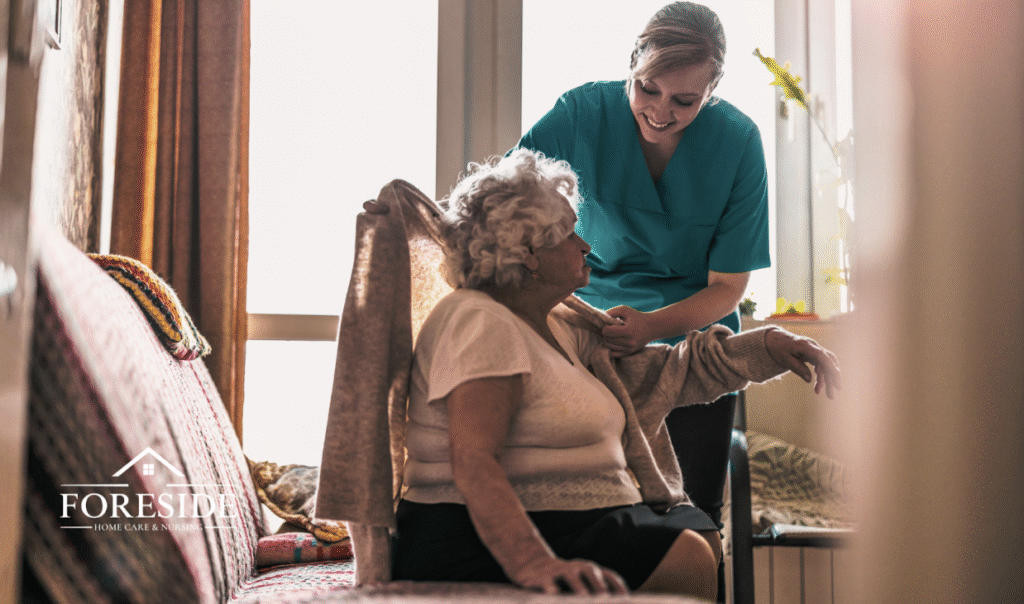
Wandering and Exit Safety With Dignity
Wandering isn’t “bad behavior”—it’s a form of communication. Let’s protect while preserving autonomy.
- Place a table or plant near the front door to gently slow exit impulses.
- Use door alarms, chimes, and motion sensors.
- Install simple door camouflage: paint the door to blend in or hang a full-length mirror nearby (many will avoid walking “into” their reflection).
- Create a safe walking path indoors and a secure outdoor loop for movement.
Comfort Corners: Create “Purpose Stations”
Meaningful activity helps ease agitation and nurtures one’s identity.
- Laundry station with soft towels for folding.
- Gardening nook with a few potted herbs.
- Music corner with simple playlists and labeled buttons.
- Memory station: photo albums, favorite books, tactile objects.
Hydration, Nutrition, and Mealtime Flow
Small tweaks help meals feel welcoming and less confusing.
- Use plates that contrast with the table so food is visible.
- Serve one or two foods at a time to reduce overwhelm.
- Offer finger foods if utensils become tricky.
- Keep favorite snacks and a filled water bottle within reach, all day.
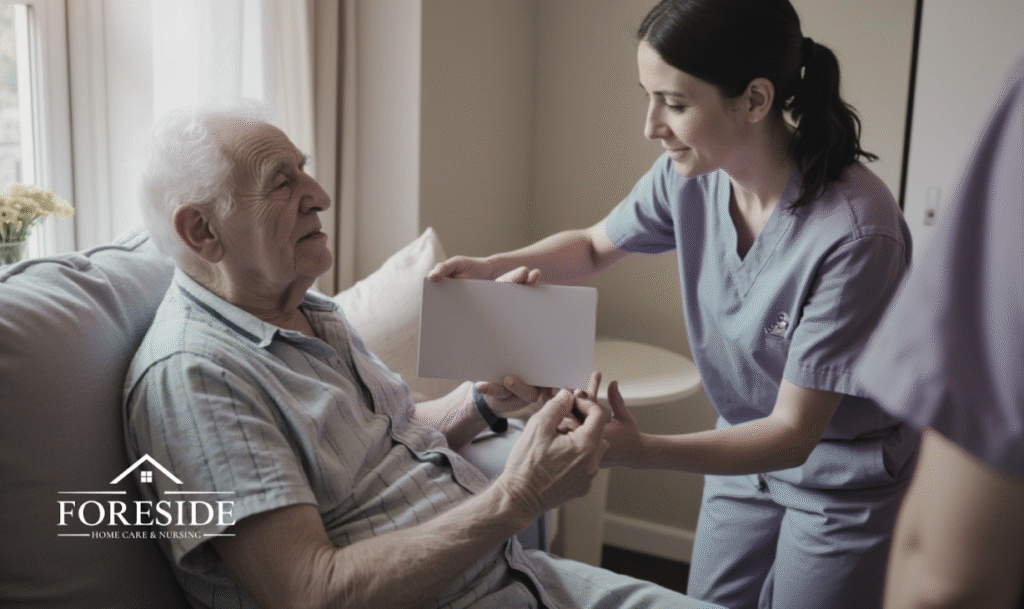
Medication and Emergency Prep
- Lock and organize medications in a weekly dispenser.
- Post an easy-to-read emergency info sheet on the fridge (diagnoses, meds, allergies).
- Keep a “go bag” ready: ID, list of meds, change of clothes, comfort items.
Heat, Wildfire, and Air Quality: SoCal Realities
Southern California brings unique environmental challenges; plan ahead.
- Keep indoor temperatures between 68–74°F; use fans and blackout curtains during heatwaves.
- Prepare for smoke days: Use an air purifier, keep windows sealed, and simplify indoor activities.
- Create a simple evacuation plan with two routes; keep keys and shoes by the door.
Technology That Gently Helps
- Smart plugs: Automatically turn off lamps or appliances when not in use.
- Door and bed sensors: Quiet alerts for caregivers at night.
- GPS trackers in shoes or watch bands for safe wandering management.
- Video doorbells for quick check-ins without startling.
Simple Table: Priority Upgrades at a Glance
| Goal | What to Add | Why It Helps |
| Prevent Falls | Grab bars, non-slip mats, stable seating | Reduces injury risk and boosts confidence |
| Reduce Confusion | Labels, signs with icons, declutter | Makes daily tasks easier to follow |
| Support Sleep | Nightlights, blackout curtains, routine | Calms sundowning, improves rest |
| Ease Mealtimes | High-contrast plates, simple menus | Encourages appetite and independence |
| Safe Movement | Secure outdoor path, indoor loop | Channels energy and reduces agitation |
Budget-Friendly Tips
- Shop adhesive LED motion lights for hallways and closets.
- Use painter’s tape to add visual contrast on step edges.
- Repurpose baskets for “purpose stations.”
- Swap busy linens for solid colors already on hand.
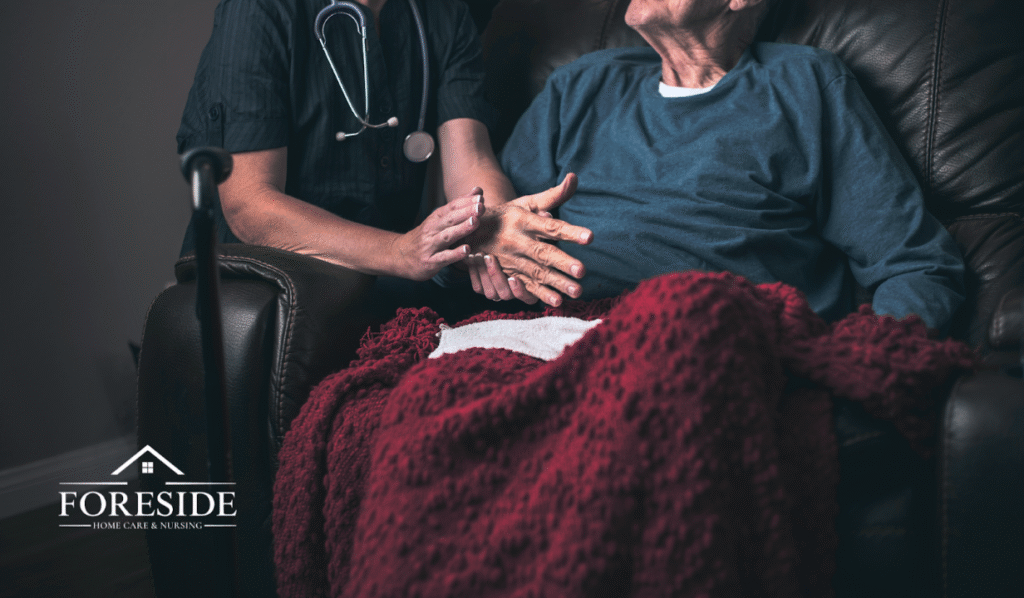
When It’s Time for Extra Hands
If daily care is stretched thin, in-home support can help maintain safety and warmth, without sacrificing the familiar comfort of home.
Local, trained caregivers can assist with personal care, routines, companionship, and respite so you can breathe.
FAQ
Q: How often should I reassess the home setup?
A: Every 3–6 months, or whenever there’s a noticeable change in mobility, sleep, or behavior.
Q: What colors work best for dementia-friendly homes?
A: Soft, warm neutrals with clear contrasts for edges and objects. Avoid busy patterns and high-glare whites.
Q: How do I handle nighttime wandering?
A: Add nightlights, a comforting pre-bed routine, door chimes, and a calm activity basket bedside (soft puzzle, tactile blanket).
Q: Can technology replace supervision?
A: Tech can support care, not replace it. Use it to reduce risk and alert you quickly. Human presence still matters most.